
AI Agent / 系统课时
处理超时与重复调用
处理超时与重复调用
工具调用最危险的情况不是“明确失败”,而是请求已经产生副作用、响应却因超时丢失。正确做法是把超时、有限重试、幂等键和熔断组合起来,让重试可控、重复调用不重复执行副作用。
学习目标
- 判断超时后哪些调用可以重试,哪些调用必须先具备幂等能力。
- 用同一个幂等键抵御“已成功但响应丢失”导致的重复执行。
- 用有限重试和熔断阻止故障期间请求持续放大。
先识别超时的危险点
超时只说明调用方没有在期限内拿到结果,并不能证明工具端没有执行。天气、库存等只读请求可在故障可恢复时进行有限重试,并受调用预算和限流约束。扣款、下单、发消息等有副作用的操作,如果每次重试都生成新的请求身份,就可能执行两次。
为一次逻辑动作生成一个业务幂等键,并在传输重试、进程重启和状态核对时复用。模型调用 ID 用于协议配对,重生成时可能变化,不能代替业务幂等键。服务端需要将键作用域、请求参数和执行结果关联,并在同一原子提交中处理本地副作用与记录。
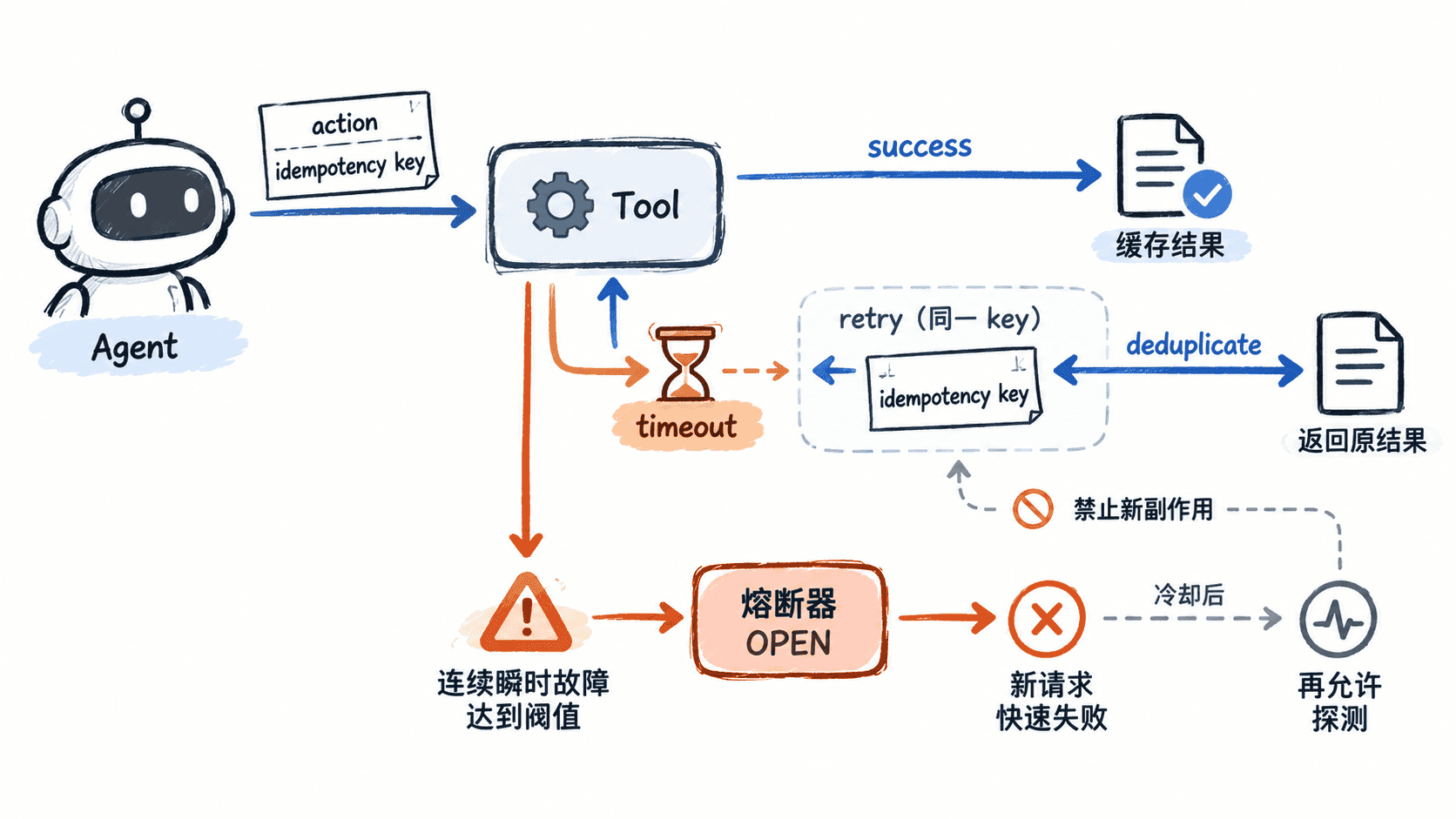
用一个主示例串起四道保护
把代码保存为 credit_retries.py,与上一课的 credit_policy.py 放在同一目录。SQLite 示例使用临时内存库。事务内校验权限、审批和余额,并写入收支及幂等记录。响应丢失发生在提交之后,下一次调用应读回原记录。示例用串行熔断器演示连续超时、拒绝新请求和冷却后探测。
python
import sqlite3
import time

from credit_policy import Approval, CreditError, TransferContext, validate_transfer

SCHEMA = """
CREATE TABLE accounts (
    user_id TEXT PRIMARY KEY, tenant_id TEXT NOT NULL,
    balance INTEGER NOT NULL CHECK(typeof(balance) = 'integer' AND balance >= 0)
);
CREATE TABLE transfers (
    tenant_id TEXT NOT NULL, actor_id TEXT NOT NULL, operation_key TEXT NOT NULL,
    target_user_id TEXT NOT NULL, amount INTEGER NOT NULL,
    PRIMARY KEY (tenant_id, actor_id, operation_key)
);
"""


def transfer_once(db, context, approval, args, now):
    if db.in_transaction:
        raise RuntimeError("transfer needs an idle connection")
    with db:
        db.execute("BEGIN IMMEDIATE")
        tenants = dict(db.execute("SELECT user_id, tenant_id FROM accounts"))
        target, amount = validate_transfer(args, context, approval, tenants, now)
        key = (context.tenant_id, context.actor_id, context.operation_key)
        previous = db.execute(
            """SELECT target_user_id, amount FROM transfers
               WHERE tenant_id = ? AND actor_id = ? AND operation_key = ?""",
            key,
        ).fetchone()
        if previous is not None:
            if previous != (target, amount):
                raise CreditError("IDEMPOTENCY_CONFLICT")
            return {"operation_key": context.operation_key, "transferred": amount}

        debit = db.execute(
            "UPDATE accounts SET balance = balance - ? WHERE user_id = ? AND balance >= ?",
            (amount, context.actor_id, amount),
        )
        if debit.rowcount != 1:
            raise CreditError("INSUFFICIENT_CREDITS")
        db.execute("UPDATE accounts SET balance = balance + ? WHERE user_id = ?", (amount, target))
        db.execute("INSERT INTO transfers VALUES (?, ?, ?, ?, ?)", (*key, target, amount))
        return {"operation_key": context.operation_key, "transferred": amount}


class CircuitOpenError(RuntimeError):
    pass


class Circuit:
    def __init__(self, threshold=2, cooldown=5):
        self.threshold = threshold
        self.cooldown = cooldown
        self.failures = 0
        self.open_until = None

    def call(self, operation, now):
        if self.open_until is not None and now < self.open_until:
            raise CircuitOpenError("circuit open")
        try:
            result = operation()
        except TimeoutError:
            self.failures += 1
            if self.failures >= self.threshold:
                self.open_until = now + self.cooldown
            raise
        self.failures = 0
        self.open_until = None
        return result


def retry(operation, circuit, clock=time.monotonic, pause=time.sleep):
    try:
        return circuit.call(operation, clock())
    except TimeoutError:
        pause(0.01)
        return circuit.call(operation, clock())


if __name__ == "__main__":
    db = sqlite3.connect(":memory:", isolation_level=None)
    db.executescript(SCHEMA)
    with db:
        db.executemany("INSERT INTO accounts VALUES (?, ?, ?)", [
            ("alice", "team-a", 100), ("bob", "team-a", 0),
        ])

    context = TransferContext("team-a", "alice", frozenset({"credit:transfer"}), "op-1")
    approval = Approval("team-a", "alice", "op-1", "bob", 50, 200)
    args = {"target_user_id": "bob", "amount": 50}
    attempts = 0

    def unreliable():
        global attempts
        attempts += 1
        result = transfer_once(db, context, approval, args, now=100)
        if attempts == 1:
            raise TimeoutError("response lost after commit")
        return result

    print(retry(unreliable, Circuit()))
    print(list(db.execute("SELECT user_id, balance FROM accounts ORDER BY user_id")))
    print("ledger rows:", db.execute("SELECT count(*) FROM transfers").fetchone()[0])
    db.close()

    def unavailable():
        raise TimeoutError("upstream timeout")

    circuit = Circuit()
    for now in (0, 1, 2, 6):
        try:
            operation = unavailable if now < 6 else lambda: "probe passed"
            print(circuit.call(operation, now))
        except TimeoutError:
            print("timeout")
        except CircuitOpenError:
            print("circuit open")
预期输出
text
{'operation_key': 'op-1', 'transferred': 50}
[('alice', 50), ('bob', 50)]
ledger rows: 1
timeout
timeout
circuit open
probe passed
把课堂机制用到真实调用
- 单次超时和总截止时间分别控制。达到截止时间后停止派发新动作。超时后的写操作可能已经提交。若外部系统不承诺幂等,应先查询状态、核对凭证或转人工处理。
- 确认工具端支持同一键、同一参数的安全重放后,再对写调用退避重试。正式服务还应限制最大尝试次数,采用带抖动的退避,并按接口契约处理限流及
Retry-After。参数、权限或审批失败不计入上游瞬时故障。 - SQLite 示例要求独占使用一条空闲连接,由写锁保护幂等检查与副作用。权限和审批来自服务端测试上下文。真实服务使用持久库并在提交前按一致性要求读取最新权限和审批。若副作用发生在外部服务,本地事务无法覆盖远端提交,需要外部幂等接口或可核验的状态查询。审批过期后可走另行授权的状态查询,不能重新发起写入。
- 熔断按工具或上游故障域计数。串行示例中冷却后只有当前调用能探测。并发实现需要同步限制探测数量,并在探测成功后才关闭熔断。熔断不会撤销已发出的请求。
验证保护是否生效
至少测试提交后丢响应、并发使用同一键、同键不同参数、余额不足回滚、持续故障和冷却后探测。分别核对调用返回、账户余额及账本记录。一次结果文本相同并不能说明副作用只发生了一次。
按自己的节奏,确认真正理解。