
架构与系统设计 / 系统课时
应用层怎样协调多个领域对象
应用层怎样协调多个领域对象
一次业务用例往往不只碰一个对象:应用层需要加载聚合、调用领域行为、保存结果,并在失败时结束流程。本节用“订单预留库存”串起完整调用链,重点看 Application Service 如何负责协调,而不把库存判断和订单状态规则写进自己。
学习目标
- 说明 Application Service 在多对象用例中的协调职责
- 区分应用层流程控制与领域对象业务规则
- 能按照加载、调用、持久化的顺序组织一次完整用例
从用例边界开始
应用服务的入口通常对应一个明确用例,例如“为订单预留库存”。它接收的是完成用例所需的参数,而不是把 HTTP、数据库连接或 ORM 实体直接暴露给领域层。
应用层最重要的工作是安排顺序:先从 Repository 取得需要参与本次用例的聚合,再调用它们公开的领域行为,最后保存发生变化的聚合。它知道“先做什么、后做什么”,但不负责回答“库存是否足够”“订单当前状态是否允许预留”这类业务问题。
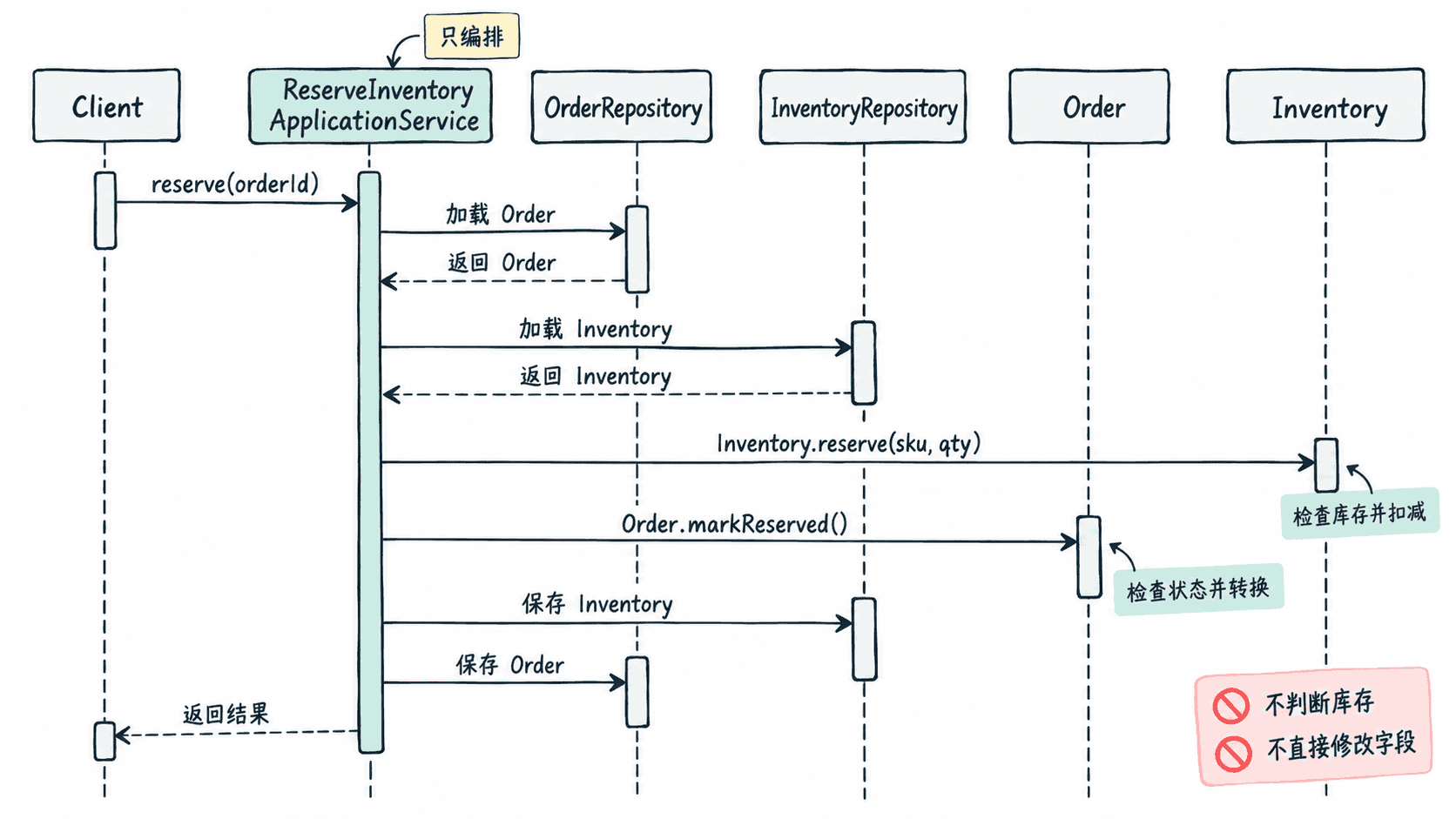
用完整代码观察协调过程
下面的 Java 示例使用内存 Repository,便于直接运行。真正项目中 Repository 的实现通常位于基础设施层,但应用服务只需要依赖抽象,不需要知道数据最终存进哪种数据库。
import java.util.HashMap;
import java.util.Map;

public class Main {
    record ReserveInventoryCommand(String orderId) {}

    static final class Order {
        private final String id;
        private final String sku;
        private final int quantity;
        private String status = "CREATED";

        Order(String id, String sku, int quantity) {
            this.id = id;
            this.sku = sku;
            this.quantity = quantity;
        }

        String id() { return id; }
        String sku() { return sku; }
        int quantity() { return quantity; }
        String status() { return status; }

        void markReserved() {
            if (!"CREATED".equals(status)) {
                throw new IllegalStateException("当前订单状态不能预留库存");
            }
            status = "RESERVED";
        }
    }

    static final class Inventory {
        private final String sku;
        private int available;

        Inventory(String sku, int available) {
            this.sku = sku;
            this.available = available;
        }

        String sku() { return sku; }
        int available() { return available; }

        void reserve(int quantity) {
            if (quantity <= 0) {
                throw new IllegalArgumentException("预留数量必须大于 0");
            }
            if (available < quantity) {
                throw new IllegalStateException("库存不足");
            }
            available -= quantity;
        }
    }

    interface OrderRepository {
        Order get(String orderId);
        void save(Order order);
    }

    interface InventoryRepository {
        Inventory getBySku(String sku);
        void save(Inventory inventory);
    }

    static final class InMemoryOrderRepository implements OrderRepository {
        private final Map<String, Order> data = new HashMap<>();

        void add(Order order) { data.put(order.id(), order); }

        public Order get(String orderId) {
            Order order = data.get(orderId);
            if (order == null) throw new IllegalArgumentException("订单不存在");
            return order;
        }

        public void save(Order order) {
            data.put(order.id(), order);
        }
    }

    static final class InMemoryInventoryRepository implements InventoryRepository {
        private final Map<String, Inventory> data = new HashMap<>();

        void add(Inventory inventory) { data.put(inventory.sku(), inventory); }

        public Inventory getBySku(String sku) {
            Inventory inventory = data.get(sku);
            if (inventory == null) throw new IllegalArgumentException("库存记录不存在");
            return inventory;
        }

        public void save(Inventory inventory) {
            data.put(inventory.sku(), inventory);
        }
    }

    static final class ReserveInventoryApplicationService {
        private final OrderRepository orders;
        private final InventoryRepository inventories;

        ReserveInventoryApplicationService(
                OrderRepository orders,
                InventoryRepository inventories) {
            this.orders = orders;
            this.inventories = inventories;
        }

        void handle(ReserveInventoryCommand command) {
            Order order = orders.get(command.orderId());
            Inventory inventory = inventories.getBySku(order.sku());

            // 业务判断留在领域对象内部,应用层只负责安排调用顺序。
            inventory.reserve(order.quantity());
            order.markReserved();

            inventories.save(inventory);
            orders.save(order);
        }
    }

    public static void main(String[] args) {
        InMemoryOrderRepository orders = new InMemoryOrderRepository();
        InMemoryInventoryRepository inventories = new InMemoryInventoryRepository();

        Order order = new Order("O-1001", "SKU-1", 3);
        Inventory inventory = new Inventory("SKU-1", 10);
        orders.add(order);
        inventories.add(inventory);

        ReserveInventoryApplicationService service =
                new ReserveInventoryApplicationService(orders, inventories);
        service.handle(new ReserveInventoryCommand("O-1001"));

        System.out.printf(
                "订单 %s 状态: %s,剩余库存: %d%n",
                order.id(), order.status(), inventory.available());
    }
}
预期输出
订单 O-1001 状态: RESERVED,剩余库存: 7示例里的应用服务没有直接修改库存字段,也没有自己判断订单状态;这些规则分别由 Inventory.reserve 与 Order.markReserved 维护。这样规则无论被 HTTP 接口、消息消费者还是批处理任务触发,都不会因为入口不同而丢失。
应用层不应该吞掉领域规则
如果应用服务开始出现大量“库存不足就怎样”“订单状态为某值才允许怎样”的条件分支,它就逐渐变成真正的业务模型。结果是同一规则容易在多个用例中重复,领域对象反而只剩属性和 getter/setter。
更稳妥的分工是:应用层决定参与者和调用顺序;实体、值对象、聚合或领域服务决定业务是否成立;Repository 负责取得和保存聚合;基础设施层负责 Repository 的具体存储实现。
把事务边界放在用例周围
真实项目通常会让一次应用服务调用对应一个事务边界,使“扣减库存”和“更新订单状态”要么一起成功,要么一起回滚。事务管理属于用例执行控制,不应迫使领域对象依赖数据库事务 API。
当流程进一步包含支付网关、消息发布等外部系统时,就不能简单假设单个本地事务覆盖所有步骤,需要根据一致性要求采用 Outbox、Saga 等机制。无论实现如何变化,应用服务的核心角色仍是协调一次用例,而领域规则应继续留在最能表达业务语义的领域对象中。