
技术英语 / 系统课时
完成一次远程团队沟通演练
完成一次远程团队沟通演练
这次演练模拟一项跨时区开发任务:你会先接收英文需求,再确认范围、提出技术方案、异步汇报进度、回应追问,并在会议后发送跟进消息。重点不是句式复杂,而是让每条消息都降低下一位协作者的理解成本和等待时间。
学习目标
- 从英文需求中识别范围、截止时间、依赖与未决问题
- 用简洁英文说明方案、进度、风险和需要他人决策的事项
- 在跨时区场景中留下可追踪的结论、负责人和下一步
先把需求中的空白补齐
模拟需求是:产品团队希望“在 Friday 前支持把筛选后的结果导出为 CSV”。这句话看似明确,实际上至少缺少四个边界:导出当前页还是全部匹配结果、CSV 包含哪些字段、数据量上限是多少、Friday 按哪个时区计算。
不要先回复 “Sure, I can do it.”。更好的第一条消息是把你已经理解的部分和真正需要回答的问题放在一起:
I understand the goal as exporting the currently filtered result set to CSV. Before I start, I want to confirm four points: should the export include all matching rows or only the current page, which columns are required, is there a maximum row count, and what timezone should I use for the Friday deadline?
这条消息没有把需求重新抛回给对方,而是展示了你的当前理解,并把模糊点压缩成可回答的清单。对跨时区团队尤其重要,因为一次遗漏可能意味着多等半天。
用方案消息建立共同预期
假设对方确认:导出全部匹配结果,沿用当前表格可见字段,上限 50,000 行,截止时间为 Friday 16:00 UTC。接下来不要只说 “I'll work on it.”,而要给出足够的技术路径和风险边界。
Plan: I will reuse the existing filter parameters, fetch matching rows through the export endpoint, generate the CSV asynchronously for large result sets, and return a download link when the file is ready. I will keep the 50,000-row limit on the server side. The main risk is export time for large queries, so I will measure that before marking the task complete.
这段方案让产品、后端和测试都能判断你的理解是否偏离。它还提前暴露了性能风险,减少临近截止时间才发现问题的概率。
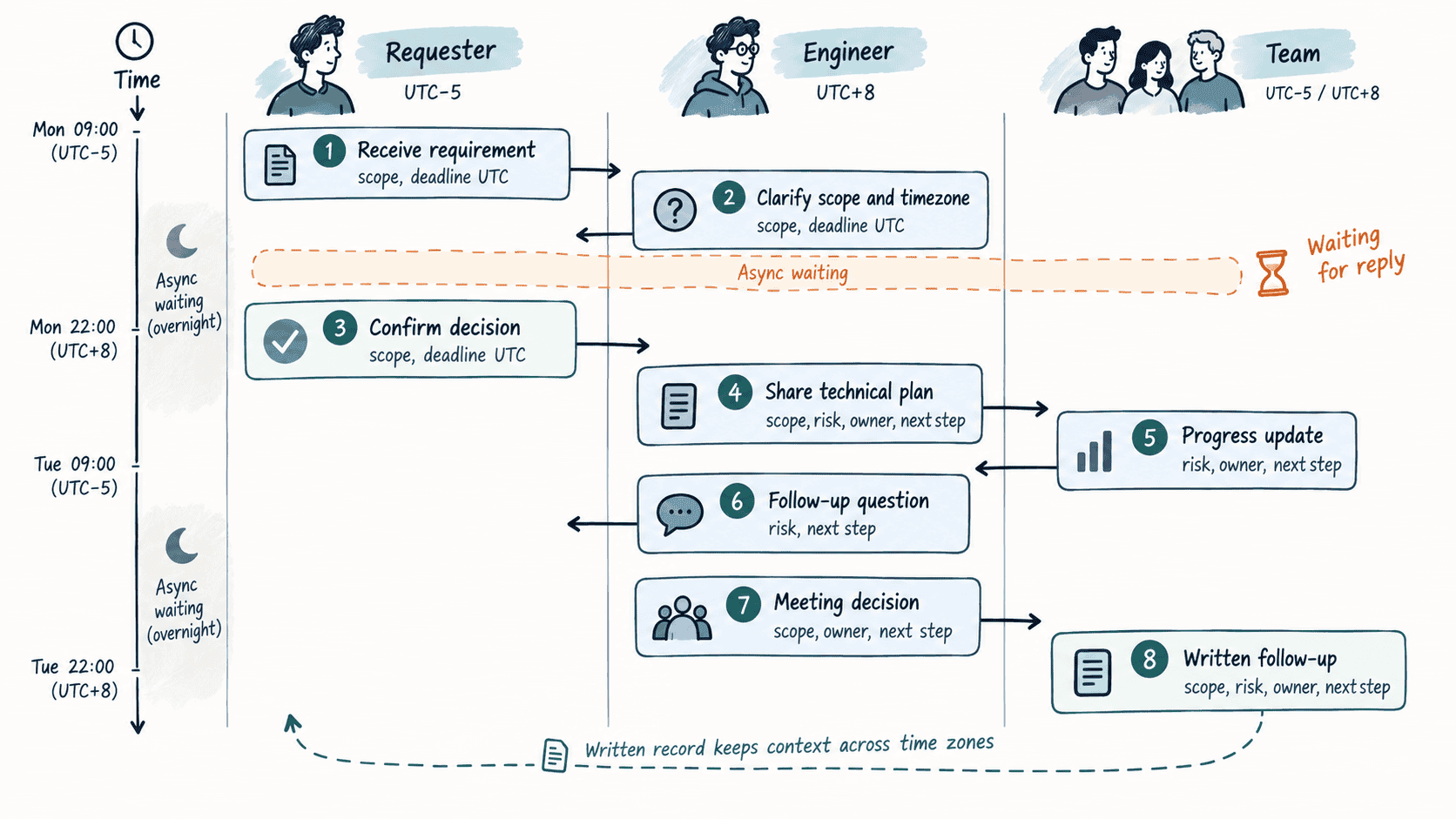
远程沟通的核心不是消息越多越好,而是每次交接都带上“当前状态 + 未决事项 + 下一步”。图中的每一跳都应该让接收者不依赖同步会议也能继续工作。
汇报进度时只报告有用变化
进度更新最容易写成 “Still working on it.”,但这几乎没有协作价值。有效更新至少包含已经完成的部分、当前问题、是否影响时间和下一次可期待的结果。
Progress update: the export flow is working for small and medium result sets, and the 50,000-row limit is enforced server-side. Large exports are slower than expected, so I am profiling the query before I finalize the implementation. I do not expect this to change the Friday 16:00 UTC target. My next update will include the measured export time and any mitigation.
如果已经存在延期风险,就不要用模糊的 “might be a bit late”。应明确指出影响与需要的选择,例如 “This puts the Friday target at risk. I can either keep the full export scope and move the delivery, or ship the 10,000-row limit first and raise it after optimization.”。这样对方可以真正做决定。
处理追问时先回答再解释
远程讨论中,追问常常很短,例如 “Why async?”。回复时先给结论,再补原因,避免让对方读完一长段才找到答案。
I chose an asynchronous export because large filtered queries can exceed a normal request timeout. The user gets a job status immediately, while the server generates the file in the background. For small exports we could keep a synchronous path, but using one flow for both sizes keeps the client behavior consistent.
如果问题涉及取舍,可以补上你接受什么条件会改变决定,例如 “If we cap exports at 5,000 rows, a synchronous response would be reasonable.”。这类句子能把争论从个人偏好转成可验证的技术边界。
会后跟进要固定决定和负责人
同步会议结束后,最容易丢的是口头决定。会后消息不需要逐字记录讨论,只需保存结论、负责人、时间和仍未解决的问题。
Follow-up from today's discussion: we will keep one asynchronous export flow for all result sizes. I will finish the server-side job handling and performance check. Maya will confirm the final CSV column order. The target remains Friday 16:00 UTC. The only open item is whether exported timestamps should use UTC or the viewer's timezone; please reply in this thread so we keep the decision with the task context.
这条消息同时解决了跨时区协作的三个风险:不同人记住不同结论、负责人不清楚、时间表达含糊。尤其是截止时间,尽量写绝对时区而不是 “EOD Friday”“tomorrow morning” 这类依赖所在地的表达。
完成整轮演练后,检查每条英文是否都能独立回答接收者最关心的问题:现在发生了什么、我需要做什么、什么时候需要、还有什么没决定。只要消息持续减少猜测、等待和重复确认,你的远程技术英语就已经从“能表达”进入“能协作”的层级。