
技术英语 / 系统课时
完成一次开源协作全流程演练
完成一次开源协作全流程演练
这次演练把一次开源协作拆成完整闭环:先从文档中找约束,再把不确定点写成可回答的问题,随后完成 Issue、Pull Request、Review 回复和变更总结。目标不是写得像母语者,而是让协作者能快速判断问题、范围、风险和下一步。
学习目标
- 从英文文档中提取任务约束、现状与待确认点
- 写出上下文完整、可执行的 Issue 与 Pull Request 说明
- 用 Review 回复和最终总结清楚记录决定、修改与验证结果
把模拟任务说清楚
假设你要处理一个文档型开源任务:README 说明配置项 timeout_ms 的默认值是 5000,但没有解释请求级 timeout 与全局配置同时存在时谁优先。维护者希望你补清楚规则,并确保示例不会让读者误以为两者会相加。
先不要立刻写 Issue。阅读相关段落后,至少提取三类信息:当前文档已经明确了什么、哪里存在歧义、你准备修改哪些内容。这样后续英文不会停留在 “The docs are confusing” 这种无法行动的描述。
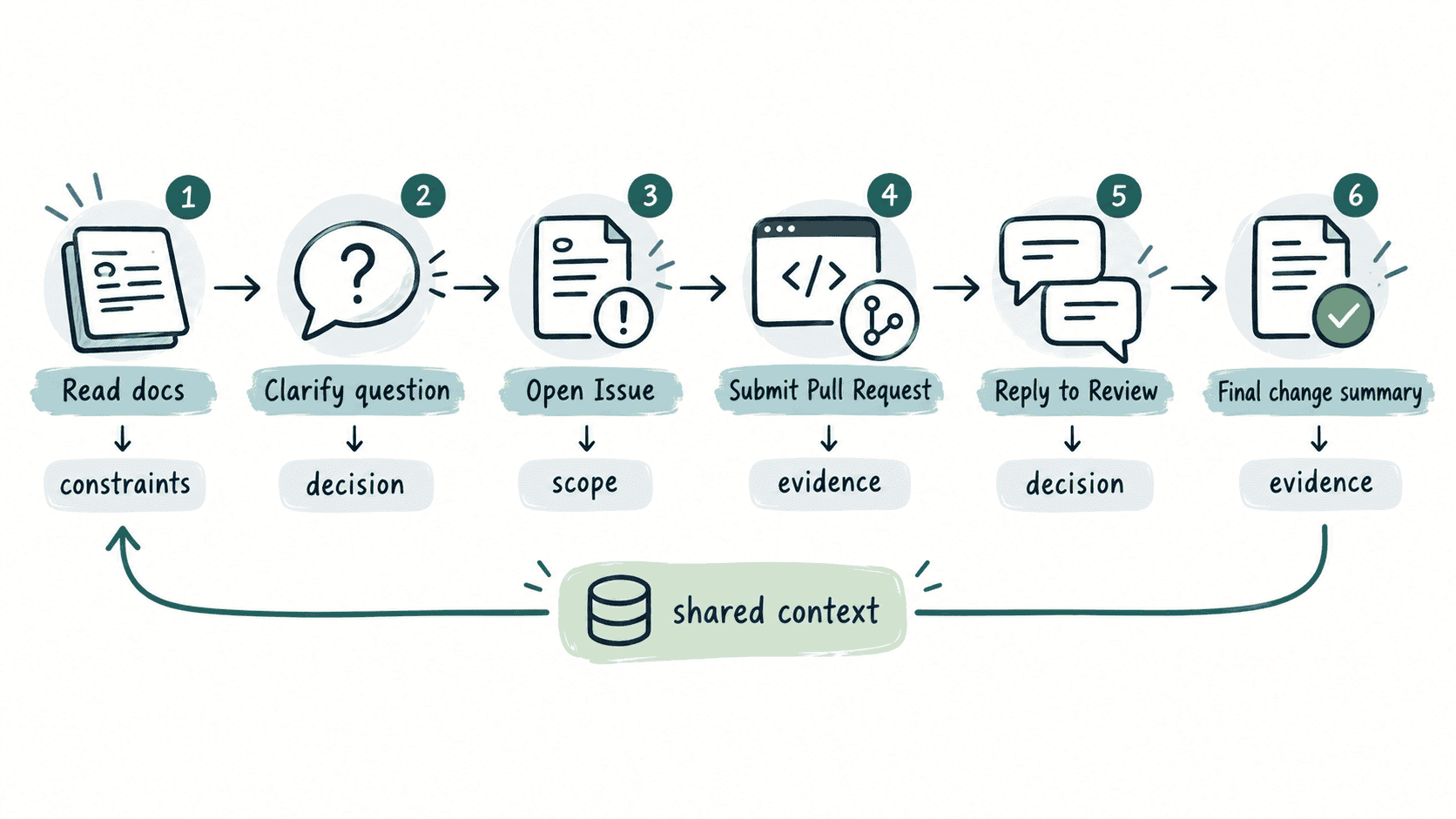
判断一段英文是否够用,可以问自己:没有参与前序讨论的人,只看这条消息,能否回答 “What is wrong?”, “What should change?” 和 “How will we know it is correct?”。如果不能,就说明上下文仍不完整。
从文档提炼 Issue
好的 Issue 不是复述不满,而是把观察、影响和待确认问题分开。针对这个任务,可以写成:
Title: Clarify timeout precedence in the README Context: The configuration reference says that
timeout_msdefaults to 5000, but it does not explain what happens when a request-level timeout is also provided. Problem: Readers may assume that the two values are combined or that the global value always wins. Proposed change: Add one precedence rule and update the example so the active timeout is explicit. Question: Should the request-level timeout overridetimeout_mswhen both are set?
这里最关键的是最后一句。它把真正阻塞修改的问题变成维护者可以直接回答的 yes/no 决策,而不是让对方重新猜测你的意图。
收到答复后,要把决定写回协作上下文。例如维护者回复 “Yes, request-level timeout should win.”,你就可以在后续说明中明确使用 “Based on the maintainer's confirmation, the request-level timeout takes precedence.”。这样 Pull Request 不需要读者回翻整段讨论。
让 Pull Request 可快速审查
Pull Request 说明要回答三件事:改了什么、为什么这样改、审查者如何确认。对于纯文档变更,不必夸大成 “major improvement”,而要精确列出改动边界。
Summary: Clarifies that a request-level timeout overrides the global
timeout_msvalue. Changes: Adds the precedence rule to the configuration section and updates the timeout example. Out of scope: No runtime behavior or default values are changed. Validation: Checked that the terminology matches the configuration reference and that the example uses the same precedence rule.
其中 “Out of scope” 很重要。它主动告诉审查者这次没有改运行逻辑,避免对方花时间寻找不存在的代码变化。对于更大的任务,也可以用同样方式写出未处理的兼容性、性能或迁移事项。
用 Review 回复推进决策
Review 回复应先承认对方指出的具体问题,再说明你采取了什么行动。如果不同意,也要把理由落在约束、证据或范围上,而不是只说 “I don't think so”。
假设审查者说术语 “local timeout” 可能与代码中的 “request-level timeout” 不一致,可以回复:
Good catch. I changed “local timeout” to “request-level timeout” so the README now matches the configuration reference. I also updated the example caption to use the same term.
如果暂时不修改,可以写:
I kept the current wording because this section describes user-facing behavior rather than the internal option name. To avoid ambiguity, I added the exact option name in parentheses. If you prefer the configuration term everywhere, I can make that change consistently.
第二种回复没有回避意见,而是提供理由、已做的缓解和可继续讨论的选择。这样的英文能推动决策,而不是制造新的来回确认。
用最终总结闭环
合并前后都可以发送一条简短的最终总结,把已经决定的内容、实际变化和验证证据放在一起:
Clarified the timeout precedence in the README: a request-level timeout overrides the global
timeout_msvalue. Updated the example and terminology to match the configuration reference. The change is documentation-only; runtime behavior and defaults are unchanged.
交付前做一次上下文检查:Issue 是否包含现象与问题,Pull Request 是否说明范围与验证,Review 回复是否记录采取的动作,最终总结是否与实际改动一致。只要协作者不需要依赖私聊、猜测或翻找多个页面才能理解这次变更,这次英文开源协作就达到了可复用、可审查、可追踪的标准。